


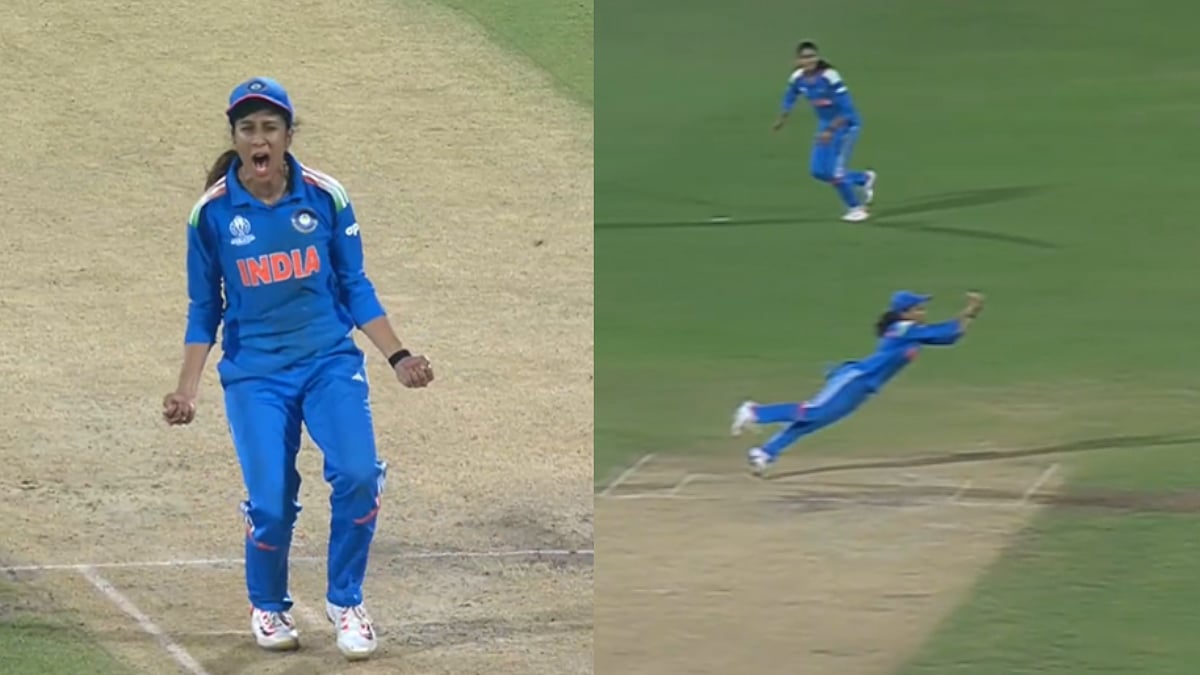
India Women delivered a commanding all-round performance to defeat Australia Women by 17 runs in the third T20I at the Adelaide Oval, tightening their grip on the multi-format series. A polished batting display set up the win before a spirited bowling effort—headlined by Shreyanka Patil—ensured the hosts fell short despite a counterattack from Ashleigh Gardner.
The result earned India two valuable points in the ongoing multi-format contest and provided strong momentum ahead of the ODI leg.
Mandhana–Rodrigues Lay the Platform
After winning the toss and opting to bat, India endured a slightly uneven start. Australia’s Darcie Brown struggled with control early, conceding five wides in her opening over along with a boundary that helped India settle. However, the Australian attack quickly regained discipline through tight overs from Gardner and Kim Garth, building pressure that resulted in Shafali Verma’s dismissal.
At that stage, India needed consolidation—and they got much more.
Smriti Mandhana and Jemimah Rodrigues stitched together a vital 121-run partnership that completely altered the tempo of the innings. Initially cautious, the pair gradually expanded their strokeplay, rotating the strike efficiently while capitalizing on loose deliveries.
By the end of the PowerPlay, India had advanced to 54/1, thanks to three boundaries in the sixth over that shifted momentum decisively. Mandhana, elegant and assured, anchored the innings with calculated aggression. She reached her half-century in the 12th over with a commanding six over mid-wicket, a shot that symbolized her dominance at the crease.
Rodrigues complemented her perfectly. Where Mandhana relied on timing and placement, Rodrigues used nimble footwork and inventive angles to pierce the field. Their stand featured consistent boundary-scoring interspersed with intelligent running between the wickets—an essential factor on a surface that appeared slightly sluggish.
Mandhana eventually departed for a well-crafted 82 in the 17th over, dismissed by Annabel Sutherland after launching multiple boundaries and maximums. Her knock had already established the foundation India required.
Read also: Russia Restricts Telegram Access Amid Push for State Apps
Late Acceleration Despite Setbacks
Rodrigues survived a scare in the 15th over when she was dropped—an error that proved costly. She capitalized on the reprieve and brought up her fifty in the 18th over, maintaining India’s forward thrust.
A quick cameo from Richa Ghosh added valuable impetus at the death. Her 18 runs off just seven deliveries ensured India breached the 170-mark comfortably. Though Sutherland bowled a tight final over conceding only three runs while claiming multiple wickets, India’s total of 176/6 appeared competitive.
Given the conditions and the pressure of a run chase, it was a total that demanded a strong Australian response.
Australia’s Fast Start and Sudden Collapse
Australia’s reply began explosively. Renuka Singh Thakur’s opening over went for 18 runs, allowing the hosts to seize early momentum. However, the early flourish quickly gave way to collapse.
Shreyanka Patil, brought into the XI in place of Kranti Gaud, made an immediate impact. She dismissed Georgia Voll in her first over, breaking Australia’s rhythm. In the following over, Renuka bounced back by removing Beth Mooney, who holed out to deep backward square leg.
The pivotal moment arrived in the fourth over. Veteran all-rounder Ellyse Perry, playing her milestone 350th international match, was bowled by Shreyanka. That wicket reduced Australia to 32/3, swinging control firmly toward India.
The early breakthroughs proved decisive, preventing Australia from building sustained partnerships.
Gardner’s Resistance
Phoebe Litchfield and Ashleigh Gardner attempted to repair the innings with a 31-run stand. Litchfield showed intent but perished attempting an ambitious switch-hit, caught at long-off.
Gardner then assumed responsibility. Her innings blended power with placement, particularly strong down the ground and square of the wicket. A dropped catch by Amanjot Kaur offered her a reprieve, and she capitalized with clean hitting.
Gardner reached her half-century in the 16th over, briefly reviving Australian hopes. A light drizzle during this phase seemed to quicken the outfield, allowing the ball to travel faster off the bat and aiding the chase.
Yet India remained composed.
Rodrigues’ Moment of Brilliance
Just when Gardner looked poised to engineer a dramatic turnaround, Jemimah Rodrigues produced a match-defining moment in the field. Sprinting across deep mid-wicket, she completed a full-length diving catch to dismiss the Australian all-rounder.
That breakthrough effectively ended Australia’s realistic hopes.
The lower order faltered under pressure. Grace Harris stepped on her stumps in an unfortunate dismissal, while Sophie Molineux was trapped LBW soon after. Shreyanka returned to trap Annabel Sutherland in front, securing her third wicket of the evening.
Australia closed on 159/9, falling 17 runs short despite their mid-innings resurgence.
Shreyanka Patil’s Impact
Shreyanka’s figures of 3/22 were instrumental in shaping the result. More significant than the numbers was the timing of her strikes. Removing Perry during the PowerPlay and returning to break key partnerships underlined her tactical value.
Her performance demonstrated maturity in length variation and composure under pressure. On a surface that offered limited turn, she relied on discipline rather than extravagance—forcing batters into errors.
Alongside her, Sree Charani also impressed with three wickets, reinforcing India’s bowling depth.
Tactical Assessment
India’s victory was built on three structural elements:
- A stabilizing middle partnership after an early wicket.
- Early breakthroughs with the ball that prevented Australia from dictating terms.
- Sharp fielding interventions, notably Rodrigues’ catch.
The ability to recover from a loose opening over and reassert control highlighted India’s adaptability. Conversely, Australia’s inability to string together substantial partnerships beyond Gardner’s resistance proved costly.
From a multi-format series perspective, securing two additional points strengthens India’s strategic position heading into the ODI phase.
Looking Ahead: ODI Leg Begins
The series now transitions to the 50-over format, with the first ODI scheduled at The Gabba on February 24. The shift in format will test both teams’ squad depth and tactical flexibility.
India will aim to carry forward the confidence gained from this T20I triumph, particularly the form of Mandhana and Rodrigues at the top and the emerging consistency of Shreyanka in the bowling department.
Australia, meanwhile, will seek improved discipline with the ball early on and greater batting resilience through the middle overs.
India’s 17-run win at Adelaide Oval was not merely a narrow triumph—it was a demonstration of structured execution. Mandhana and Rodrigues constructed the foundation; Shreyanka dismantled the opposition’s core; and collective fielding excellence sealed the outcome.
With momentum now in their favor, India head into the ODI leg with belief and tactical clarity. The contest remains competitive, but this performance has shifted the narrative decisively.
Brief Scores:
India 176/6 (Smriti Mandhana 82, Jemimah Rodrigues 59)
Australia 159/9 (Ashleigh Gardner 57)
India won by 17 runs.



Pingback: Australia in Transition: India Seal T20 I Series as Reset Begins - All Trends Today India